Published: October 2026
Keywords:
Clinic; Colonial apparatus; Subjectivity; Decolonisation; Indigenous epistemologies; Epistemic-aesthetic reconstitution; Sensation.
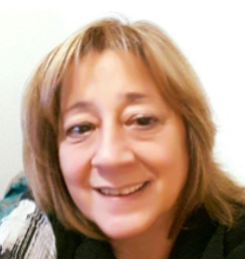
Maria Esther Cavagnis
Maria Esther Cavagnis, Specialist in systemic-relational therapy with families and couples. Director of the Families and Couples Foundation.
She is a psychologist and family therapist with extensive experience in clinical practice, education, and research. She studied Psychology at the National University of Córdoba in Argentina and completed postgraduate studies in Clinical Psychology and Educational Research in Colombia. Since 2005, she has served as Director of Studies at the Family and Couples Therapy Foundation (FyP) in Buenos Aires, coordinating training and research programs. Since 1980, she has worked in psychotherapy and family therapy practice.
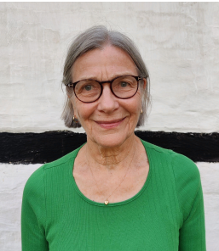
Inga-Britt Krause
Dr Inga-Britt Krause, PhD, Training and Development Consultant at the Tavistock Clinic; Lecturer in the Ph.D. program in Systemic Psychotherapy.
She is an anthropologist and a systemic psychotherapist.
Abstract
Editorial Team’s Note: The Metalogos 2026 two-day conference concluded on an ideal note, by general consensus, with the online participation and presentations of Maria Esther Cavagnis and Dr Inga-Britt Krause, under the shared title: “Decolonising Subjectivity, Decolonising the Clinic: A Presentation in Two Parts”. This is an ongoing research and clinical project.
For this reason, this issue features only the video that Maria Esther Cavagnis sent us in advance, allowing sufficient time for it to be translated from Spanish by Anastasia Panidou.
Abstract from the Metalogos 2026 Conference Programme
We consider the clinic as a modern and colonial apparatus. The clinic erases differences, generalises and universalises, and casts flows and processes into categories, which are hierarchical and render singularity invisible. This constrains how we think about the subject and subjectivity, in particular, the modern subject is seen to be a unit, a representation and an identity.
We suggest that there are other indigenous ways to think about subjectivity: Amerindian perspectivism, New Guinean gender entanglement, Aboriginal ecosophy, which inhabit partial connections, the distributed and divisible person. In the clinic, subjectivity is produced in relation, in a context and a situation as a colonisation of perception and a numbing of sensation. We are constituted by this modern colonial apparatus, by these collective assemblages of enunciation; therefore, decolonisation is impossible. We can opt for an epistemological reconstitution or an epistemic-aesthetic reconstitution, referring to certain types of phenomena related to knowing and sensing. In this presentation, through examples from clinical work and supervision, we propose to explore this state of affairs by detecting and addressing the knowledge that obstructs sensations.