Published: October 2026
Keywords:
Psychotherapy, narrative multiplicity, embodiment, free writing, polyphony, reflecting teams, collaborative practice, dialogicity.
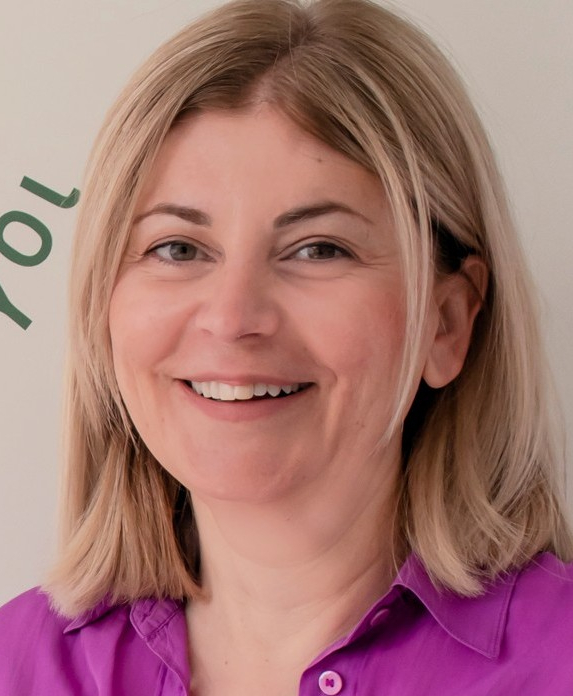
Olga Konstantinou
Olga Konstantinou, PhD, is a psychologist, systemic psychotherapist, trainer, and supervisor (psychologist’s professional licence issued in October 2001, reference no. 22081).
She initially studied Education at the National and Kapodistrian University of Athens. During her studies, she was introduced to psychology and decided to pursue further studies in this field. She studied psychology in England, earning a BSc in Psychology and an MSc in Health Psychology. In Greece, she earned a PhD in Psychology from the Department of Psychology at the National and Kapodistrian University of Athens.
She worked as a psychologist with young offenders and their families in the Child and Adolescent Forensic Team at South London and Maudsley NHS. Shortly after returning to Greece, she trained in systemic psychotherapy at the Systemic Institute of Thessaloniki. She also trained in human systems supervision at the THESYS Centre for Systemic Therapy and in couples counselling at the Systemic Institute of Thessaloniki.
She completed training in trauma therapy using EMDR (Eye Movement Desensitisation and Reprocessing) and CRM (Comprehensive Resource Model) at the Athens Institute of Trauma Therapy, as well as training in cognitive behavioural psychotherapy at the Institute of Behaviour Research and Therapy.
Since 2001, she has maintained a private practice, providing psychotherapy to adults, couples, and families. She is a member of the Systemic Association of Northern Greece (SEVE), the European Family Therapy Association (EFTA-CIM), and EMDR Hellas.
Since 2020, she has been an Associate of The Taos Institute. Since 2023, she has also been a trainer and supervisor in the International Training Programme in Counselling and Psychotherapy at the Centre for Continuing Education and Lifelong Learning, National and Kapodistrian University of Athens.
Abstract
This paper offers a theoretical and practice-oriented contribution to the discussion of embodiment in systemic psychotherapy. Drawing on collaborative and dialogical traditions, phenomenology of the body, polyphony, and therapeutic writing (Anderson & Goolishian, 1988; Andersen, 1995; Bakhtin, 1984; Penn, 2009; Shotter, 2008), the paper outlines a reflective cycle involving contact with embodied experience, movement and/or sensory exploration, free writing, and reflective listening. Its central proposition is that bodily experience is not merely content to be interpreted but may, through writing and dialogue, become material for the emergence and negotiation of different narrative positions. Clinical examples are used solely to illustrate the proposed practice and not as evidence of therapeutic effectiveness. The paper concludes by considering the possibilities, limitations, and conditions of this embodied-dialogical practice. Particular emphasis is placed on the attempt to engage in dialogue with the body through modes to which it can respond—sensation, breath, image, rhythm, and movement—and to follow their movement into writing and reflective dialogue, where new connections and narrative possibilities may emerge.