Published: March 2026
Keywords:
Alan Wade. Imelda McCarthy, resistance, language of effects, language of peaceful passivity, non violent resistance, agency.
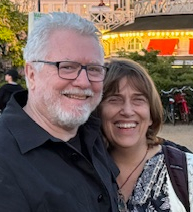
Imelda McCarthy
Dr Imelda McCarthy works as a systemic therapist / supervisor in Independent Practice. She also facilitates a weekly Fifth Province Sangha meditation group and Spiritual Direction.
Her work on the Fifth Province has been published and presented internationally in over 20 countries and has been translated into 9 languages. She is one of the co-founders of the Family Therapy Association of Ireland and the first FT training programme in Ireland. She is proud to have been on the editorial boards of Major international systemic therapy journals in Ireland, UK, USA , Greece and Australia. She has co-edited two international books with Carmel Flaskas and Jim Sheehan, “Hope and Despair in Narrative and Family Therapy” (2007) and with Gail Simon, “Systemic Therapy as Transformative Practice” (2017).
Imelda retired from 30 years teaching in Social Science at University College Dublin where she had initiated their first PhD programme in Families and Systemic Therapies.
Allan Wade
I live on the unceded lands of the Quw’utsun Indigenous First Nation on southern Vancouver Island, Canada, where I work as a family therapist, scholar, and consultant with a primary interest in addressing violence, broadly defined. I am interested in how adults and children respond to and resist violence and other forms of injustice, how offenders work to suppress and conceal that resistance, and how public institutions can respond more effectively in cases of violence.
For many years, I have worked closely with colleagues in developing “Response - Based Practice”, a method of individual and family therapy and community development, a framework for research and analysis, and a guide for practice across the institutions that respond in cases of violence. I have worked with adults and children, with individuals, couples, families, groups and organizations, with people who have been subjected to violence and people who have committed violence.
At the Centre for Response - Based Practice, we provide training and supervision to many individuals and organizations involved in responding to violence. I have written several articles and book chapters on research and practice and co - edited the (very expensive) book, “Response - Based Approaches to Interpersonal Violence”. In 2024 I was appointed to the Order of Canada, in acknowledgment of our collective work for socially justice practice in Canada and abroad.
Abstract
This conversation was a chance for me to catch up with my friend and mentor, Imelda, and connect with folks at Metalogos.
I have long admired Imelda’s work, beginning with the Fifth Province associates’ discussions of “resistance in the margins”. We share many interests, including how people work to protect others and preserve their basic human dignity in the face of violence. I am grateful to Imelda for her direct support of me and my work, personally and professionally. It has been great to be back in touch and read Imelda’s more recent work that highlights what I might call the social-spiritual dimensions of the conversations we are privileged to have in the practice of therapy.
We covered quite a bit of ground in one hour, beginning with the distinction between the language of effects and the language of responses. Different languages (e.g., Greek, English, Swedish) reflect this distinction to different degrees. We have learned that asking questions about responses tends to reveal both the deliberate / controlled nature of violence and resistance to that violence. When Imelda initially said that she found this helpful in her own life, she truly boosted my confidence and confirmed that line of thinking. Seeing the interview now, I think it’s important that we connect the violence of pornography and the violence of extractivism and emphasize the importance of inclusion as a celebration of diversity.
Thank you, Metalogos!! I hope this conversation is of interest to your readers.
Note 1. The Fifth Province
In beginning our story, we will start with outlining the myth and metaphor of the Fifth Province. Some of you will know something of this ancient Irish myth, that Imelda and her colleagues in the Fifth Province Associates (Nollaig Byrne and Phil Kearney) have practiced and written about since the 1980s. It is not known whether this province actually existed or not as its only trace is in the Irish language and in some Irish myths and stories.
The Irish or Gaelic word for “province” means “fifth”. However, in the modern - day Island of Ireland we only have four geographical provinces!
So, where is this “fifth” province?
Myth has it that it was to be found in the centre of Ireland on the Hill of Uisneach or the Hill of the Kings which is in the middle of the country.
At the Catstone on the hill it is said that the four ancient provinces of Ireland met. Uisneach was a Druidic site and the story is that Kings and chieftains from all over Ireland came there to receive counsel from Druids who were the priests and priestesses of the time. It was imagined that arms were left aside, and conversation became the medium of peaceful counsel and conflict resolution.
In the work of the Fifth Province Associates team (see imeldamccarthy.net), the metaphor of the Fifth Province re - presented a space that was connected to all those provinces of conversation that might be engaged with(in) but it was also simultaneously a space apart. It was therefore both a space of immanence and transcendence, immersion and observation – that is The Fifth Province Approach as a Systemic Meditative Practice.
Note 2. The Fifth Province group
Nollaig Byrne, Imelda McCarthy, Phil Kearny also known as the Fifth Province group operated in Ireland looking for an alternative view to problems: “There was the experience of opening things up and seeing them more clearly and then shifting them along. There was a sense of the spiritual underlying the process.” they write.