Published: March 2025
Keywords:
Gianfranco Checchin, Violeta Kaftantzi-Chasta, Milan Family Therapy, Principles and Practices of Milan Model, Process, Conversation, Psychosis, Psychiatric Hospital, Medication, Family Story, Ideals, Family Romance, Social and Political levels.
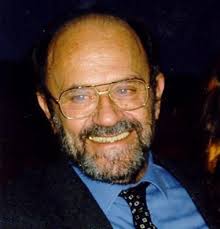
Gianfranco Cecchin
Gianfranco Cecchin, psychiatrist-psychoanalyst and educator, was one of the pioneers of family therapy in Italy and beyond. One of the symbols of Psychiatry and scientific research in Milan. After studying Medicine in Italy, he specialised in psychiatry and psychoanalysis in the USA, where he worked until the end of the 1960s. Returning from New York to Milan, he participated with Mara Selvini Palazzoli, Luigi Boscolo, and Giuliana Prata in the foundation of what would become known as the "Milan Family Therapy Group". This group developed an innovative approach to Family Therapy since 1971, initially based on the Palo Alto MRI model and then became progressively more independent, with an increasing emphasis on Cybernetics and epistemology based on the thought of Gregory Bateson. Among their most important publications are the book “Paradosso e Controparadosso” (Paradox and Counterparadox 1975) and the article “Potizzazione, circolarita, neutralita”, (“Hypothesis-Circularity-Neutrality”. 1980).
Gianfranco Cecchin and Dr. Luigi Boscolo taught entire generations of therapists, in a communication based “on the examination of the rules of the family system and not on the judgment of behaviors”. After the dissolution of the group in 1980, he founded and directed with Dr. Luigi Boscolo founded the Milanese Center for Family Therapy (Centro Milanese di terapia della Famigilia), which became one of the most important training centers for the approach that then came to be known as “Systemic Therapy”. Their work gained an increasing international influence and culminated in the publication of the book “Milan Systemic Family Therapy” (1987), which was translated into Italian in 2004 under the title “Clinica Sistemica”. The two Milanese collaborators became sought-after for seminars and other educational activities and managed to bring the new Milanese Model around the world (from 1981 until his death in early 2004 in a nighttime car accident near Brescia).
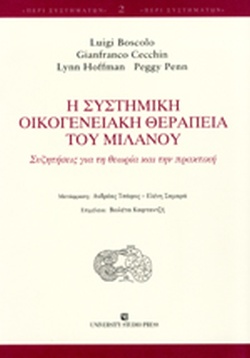
(In Greece, it was translated, with the title “THE SYSTEMIC FAMILY THERAPY OF MILAN - DISCUSSIONS ON THEORY AND PRACTICE”, by Eleni Samara and Andreas Tsafos and edited by Violeta Kaftanti-Chasta, the editor responsible for the series ON SYSTEMS, University Studio Press, Thessaloniki, 2007).
The Centro Milanese played a fundamental role in the shift of systemic therapy towards constructivist concepts, influenced by the ideas of Heinz von Foerster and Humberto Maturana, and the subsequent development towards postmodernism and social constructionism.
Cecchin's career between the 1990s and the early 2000s paralleled that of Luigi Boscolo. He wrote books and articles mainly with Italian and Anglo-Saxon collaborators.
In the United States, Lynn Hoffman and Peggy Penn published, with Cecchin and Boscolo, the volume Milan Systemic Family Therapy, a lively discussion with the two Milanese masters that was translated into various countries and became the vehicle for the new way of family therapy that came from Italy.
He traveled a lot, creating many post-Milan groups in the rest of Italy and the world, which he “co-created” with his ideas and which “co-created” him.
One of these groups was the group of therapists of the K.P.S.Y. D.T. Thessaloniki, which initially inspired it with his writings, then disturbed it, destabilised it, overturned it, excited it, with the result that these ideas and stimuli became the central “material” of its processing, adoption and organisation. His three visits in 1989, 1991 and 1992 created a new horizon of vision not only for the Mental Health Centre of Western Sector of Thessaloniki but also for many other therapeutic spaces throughout Greece.
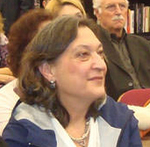
Violeta G. Kaftantzi - Chasta
Psychiatrist, psychotherapist, PhD AUTH, former Director of MHC of Western Thessaloniki.
Abstract
The "old" printed Metalogos issue 5, a tribute to our beloved teacher and friend, was published four months after his sudden death that crashed us.
Twenty-one years later, to his Memory still alive, we present the first session that took place in that public Mental Health Centre in Thessaloniki, which, under his aegis, was going to develop and become known until recently as the "systemic" Centre.
Violeta Kaftantzi-Chasta, who edited and curated the text with her known carefulness and tenderness, wrote wrote what is still valid for us:
“In December 1989, the Mental Health Centre of the Western Sector of Thessaloniki welcomed Gianfranco Cecchin for the first time as a guest instructor. Gianfranco Cecchin, always smiling, with his sparkling spirit fuelling our heated discussions, and with his only request of just one apple and half an hour of isolation wandering somewhere in the neighbourhood, influenced us forever, dissolving the illusions of our certainty.
From that three-day initiation, I chose for the honourary tribute of METALOGOS to his Memory, the first session, which took place on December 11, 1989, as well as part of his comments from the discussion that followed, which illuminate theoretically significant points of his systemic thinking and practice. I have been using this session in training for years because it clearly demonstrates the application of the basic principles of the Milan model in clinical practice; during the period when the model crystallises in the field of family therapy, the transition from First to Second Cybernetics”.