Published: October 2024
Keywords:
Ward Maillard, Mount Madonna School, Mount Madonna Center, Community, Definitions, Gregory Bateson, Mary Catherine Bateson, Humberto Maturana, Reality, Multi-realities, Legitimate Other, Cultural Biology, Reflection, Yoga, Experiential Methodology, Questions, Answers, Connection, Content, Competition, True-False, Autonomy, Affirmation, Creativity, Intuition, Risk-taking, Learning Journeys, India, Different Cultures, Family Culture, School/Classroom Culture, Sub-Culture, Love, Performance, Dominant Narrative, Capitalism, Consumerism, Inclusion, Teacher Education.
Ward Mailliard
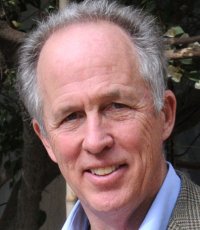
Ward Maillard is one of the founders (in 1978) of the Mount Madonna Center near Watsonville, California, and Vice President of the Board of Mount Madonna School, a K 12 school, committed to "whole child education" integrating intellectual, emotional, social and creative learning.
As an educator for over 25 years, Ward Maillard is deeply committed to the learning process and to building bridges of understanding cross-culturally and between the secular and spiritual aspects of life. He has been engaged in creating the "Values in World Thought" curriculum at Mount Madonna High School since 1992 in cooperation with Bill Moyers, whose ground-breaking interviews with anthropologist Joseph Campbell on the Power of Myth captivated Ward.
In 2007 Ward co-sponsored "Project Happiness" with the Dalai Lama Foundation, a project that developed a student-oriented curriculum based on the Dalai Lama's book "Ethics For The New Millennium". Their journey to India was the subject of a documentary film released in 2009. More recently, in 2009, Ward Maillard travelled to South Africa with his students to interview Archbishop Desmond Tutu as part of the Mount Madonna School Ubuntu and Sawubona Projects.
Ward has served for 35 years as President of the Hanuman Fellowship, the non-profit corporation that sponsors Mount Madonna Center and that is a vehicle for the teachings of Yoga and for the variety of projects that have been developed by the Fellowship Members. He is Vice President of the Sri Ram Foundation, which sponsors Sri Ram Ashram, an orphanage and school in Northern India, where he spends two months each year.
wardkranti@gmail.com
Abstract
Ward Maillard discusses the role of communities in learning processes and educational culture.
Key Insights
• Communities shape individual learning experiences and contributions.
• Education should focus on experiential learning rather than rote memorization.
• Differentiated learning is essential for first-generation learners.
• Reflection and self-reflection are crucial for personal growth in education.
• The culture of schools influences student relationships and character development.
Ward Maillard on Communities and Learning Processes
THE ROLE OF COMMUNITY IN LEARNING
Ward Maillard emphasizes the significance of community in shaping individual learning experiences. He reflects on his 35 years in educational communities, highlighting that each member brings unique contributions and needs. The essence of a community lies in its collective culture, which influences how individuals perceive their roles and responsibilities. Maillard draws on the ideas of Gregory Bateson and Humberto Maturana, suggesting that our understanding of community is deeply rooted in our interactions and the cultural contexts we choose to engage with.
EXPERIENTIAL LEARNING OVER ROTE MEMORIZATION
Maillard critiques traditional educational models that prioritize memorization and obedience over experiential learning. He advocates for a shift towards learning experiences that allow students to explore and discover knowledge. By taking students on learning journeys to diverse cultures, he encourages them to reflect on their experiences rather than simply seeking the 'right' answers. This approach fosters creativity, intuition, and a deeper understanding of the material, moving away from a purely content-driven education.
DIFFERENTIATED LEARNING FOR FIRST-GENERATION LEARNERS
In his work with schools in India, Maillard addresses the challenges faced by first-generation learners. He notes that many parents desire their children to learn English due to its perceived economic advantages. However, he emphasizes the importance of recognizing different learning levels without stigmatizing students. By implementing differentiated learning strategies, educators can create inclusive environments that respect each student's unique background and learning pace, ultimately fostering a more equitable educational landscape.
REFLECTION AS A TOOL FOR TRANSFORMATION
Maillard highlights the transformative power of reflection in the learning process. He shares his experiences with teacher training programs, where self-reflection led to significant personal growth among educators. By encouraging teachers to reflect on their experiences without judgment, they develop a deeper understanding of their teaching styles and improve their relationships with students and families. This reflective practice not only enhances teaching effectiveness but also promotes empathy and responsiveness in various contexts.
THE INFLUENCE OF SCHOOL CULTURE ON STUDENT DEVELOPMENT
The culture within schools plays a crucial role in shaping student relationships and character development. Maillard discusses how traditional power dynamics between teachers and students can hinder agency and creativity. He advocates for a shift towards a facilitative approach, where teachers learn alongside their students, fostering a collaborative learning environment. By prioritizing process and relationships over competition and grades, schools can cultivate empathetic, creative, and socially aware individuals.
THE NEED FOR A NEW EDUCATIONAL PARADIGM
Maillard calls for a reevaluation of the educational system, questioning who designs schools and for what purpose. He traces the historical roots of education to religious and economic motivations, suggesting that these foundations have led to a consumer mentality that alienates individuals from their communities and the natural world. To address these issues, he proposes a more holistic approach to education that emphasizes connection, reflection, and the development of a human operating system that prepares students for meaningful engagement with the world.