Published: December 2021, Issue 40
Keywords:
authority, dialogue, reality, rigorousness, vicinity.
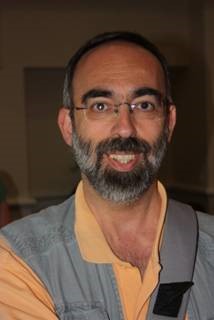
Massimo Schinco
Dr. Massimo Schinco, Psychologist Psychotherapist, is an Adjunct Professor at the Politecnico di Milano (Italy), teaches Systemic Relational Psychotherapy at the postgraduate school of "Centro Studi Eteropoiesi", Turin (Italy) and collaborates in the international activities of the Milton H. Erickson Institute of the Bay Area (USA). Between 2012-2014 he was appointed as co-director of the Milanese Center for Family Therapy in Milan (Italy). For years he has conducted Guided Practical Courses in Family Clinics for the University of Pavia and taught Psychology at the F. Ghedini Conservatory of Music in Cuneo (Italy).
He is a member of the European Association of Family Therapy. In 2014 he gave rise to the Eleogenetic Approach to change and growth. He is author of three books and numerous publications in the areas of psychological clinic, helping relationships and design of community spaces.
Abstract
Helm Stierlin’s overwhelmingly acknowledged authority mostly came from a method frame featuring the following elements: dialogue more than discipleship, rigorousness of thought together with vicinity to the patients, adherence to historical reality. With his lifelong work, Stierlin has shown how fruitful it is to keep the dialogue open between clinical practice, which requires solutions that can be applied in the immediacy of need, and academic reflection, which vice versa unfolds in detailed and long-term paths. The benefits of this dialogue also affect our training methods, which require a trans-disciplinary approach. Actually, in the trans-disciplinary field, the good quality of the outputs can be obtained only on the basis of solidly acquired disciplinary skills.