Published: October 2026
Keywords:
Theatrical improvisation, systemic appreciative therapy, psychotherapists training, therapeutic skills.
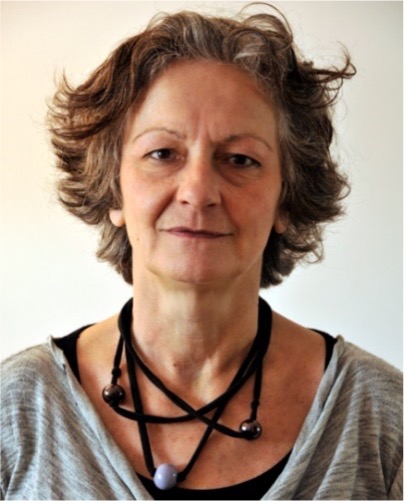
Ioulia Balaska
Ioulia Balaska is a Political Scientist, Social Psychologist (D.E.A.), Systemic Appreciative Psychotherapist and Trainer. She has developed the Improvisational Experiential Theatre method using theatrical improvisation and spontaneous writing.
She is a member of HELASYTH, EFTA, EAP and was awarded the European Certificate of Psychotherapy (ECP). She is an associate member of TAOS Institute.
Since 1995, she has been the founding director of the non-profit organisation GENATHLON – Centre for the Interdisciplinary Approach of Human and Natural Systems, where she works as a psychotherapist and coordinator of Improvisational Experiential Theatre workshops. Since 2018, she has implemented, with Smaro Markou, 1-year training programs on the Systemic Appreciative approach and on Therapeutic Writing. Since 2021, she has worked as a trainer in the post-graduate program “Alypias Techni” at the University of Thessaly, training social scientists in Systemic Psychotherapy.
She has worked as an associate at the General Secretariat for Equality, working with women’s cooperatives, as a researcher in European Commission projects and as director of the Mediterranean Women’s Studies Centre (KEGME).
She has written three books (with co-authors) and three fairy tales, which were presented in theatre.
She has published articles in scientific magazines and presented papers at national and European conferences.
balaska@genathlon.gr
Abstract
Clinical practice and research show that therapists achieve better outcomes when they develop skills such as spontaneity and imagination, embodied presence in the here-and-now, directness, and initiative. Theatre improvisation has been seen in research and training of therapists in Europe and the US to foster these skills, which cannot be taught at a cognitive level alone.
This article presents the implementation of a pilot training seminar in a University program specialising in psychotherapy titled Theatrical Improvisation in Therapy. After an initial theoretical part, with references to the international bibliography, the article describes the seminar’s implementation over two consecutive academic years, including participants' evaluation. The latter indicates that, through theatrical improvisation, participants experienced their connection to their whole being in the here-and-now, spontaneity, flexibility in the face of the unexpected, initiative and risk-taking, and increased expressive freedom verbally, emotionally, and physically.