Published: March 2025
Keywords:
Social constructionism, interview, dialogue, psychotherapy.
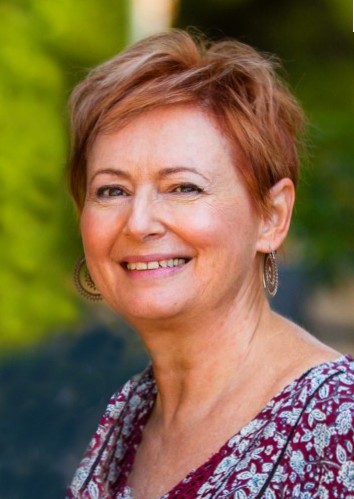
Filia Isari
Filia Isari is a Professor of Counseling Psychology, founding Director of the Laboratory of Qualitative Research in Psychology and Mental Health of the Department of Psychology at the National and Kapodistrian University of Athens https://www.qual.psych.uoa.gr/. She completed undergraduate studies in Psychology in France (Sorbonne Université), postgraduate and doctoral studies in the USA (New York University -NYU and University of California, Los Angeles- UCLA) and has international collaborations with universities and scientific institutes in Europe, the USA and Australia. She teaches courses in counseling psychology and qualitative research methodology. She is scientifically involved in constructionist, narrative, collaborative-dialogic approaches to therapeutic practice and research, issues of mental health and well-being in the community, issues of multiculturalism and social justice, and the “embodied” turn in psychology and therapy. She is Academic and Scientific Director of the International Postgraduate Program in Counseling and Psychotherapy: Systemic, Narrative, Collaborative-Dialogic Approach https://www.psychotherapy.cce.uoa.gr/, member of the committee of the international ICCP network for the International Certificate in Collaborative-Dialogic Practices (co-hosted Galveston & Taos Institute) and coordinator of the international working group for Open Dialogue Training. She is an invited member of the Taos Institute (2019-) and the Taos Associates Council (2019-2022). She has numerous written works and has edited the Greek editions of K.J. Gergen's books Therapeutic Realities: Collaboration, Oppression and Relational Flow (Field) and Relational Existence: Beyond Self and Community (Field).
Abstract
Kenneth J Gergen is a major figure in the development of social constructionist theory and practice and has inspired at the international level a large body of research and application which has crossed disciplinary boundaries. In this interview (2022), Kenneth Gergen invites us to realise that we are not talking about a specific theory so much as an ongoing dialogue, a dialogue about the nature of knowledge with ancient origins that many would trace to early Greek philosophy. In his eloquent manner he speaks about the essential orientation of constructionist inquiry as a reflective pragmatism, its recent trends and future prospects in a pluralistic world. This discussion focused also on the many applications of constructionist thought in mental health, psychotherapy, organisational change, educational practices, qualitative methods in social sciences, the reconstruction of the concept of aging and contemporary issues in cultural life.