Published: October 2022
Keywords:
Style, Coherence, Language, Ethos, Culture, Embodiment, Madness, Children, Women, Minorities, Gender, Racism, Perturbation, Education, Training, Complexity, Gregory Bateson, Giles Deleuze, Felix Guattari, Michel Foucault, Rhizome, Capitalistic Machine, Psychoanalysis, Family Therapy , Systemic Therapy.
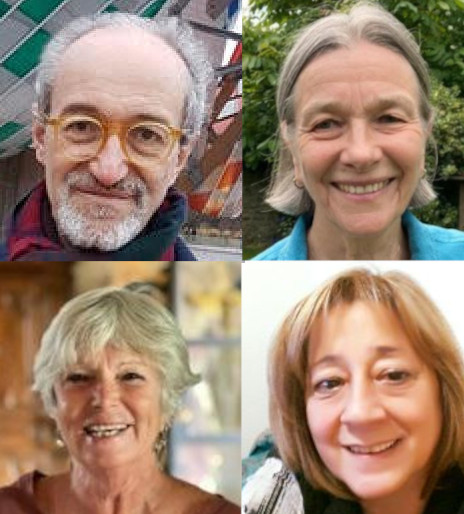
Pietro Barbetta
Pietro Barbetta is a psychotherapist, Director of the Milan Center of Family Therapy and Professor of Psychodynamic Theories at Bergamo University, Italy. He also works as an ethno-clinical therapist with asylum seekers and refugees, and has authored works in English, Italian, Spanish and French. Email: pietro.barbetta@unibg.it
Maria Esther Cavagnis
Maria Esther Cavagnis is the Director of Studies, Clinical Research Team Coordinator and Senior Tutor in the therapist training programme at the Family Therapy Foundation in Buenos Aires, Argentina. She is a visiting lecturer at several universities in Argentina and Latin America and has been working in private practice since 1982. Email: mecavagnis@gmail.com
Inga-Britt Krause
Inga-Britt Krause is a social anthropologist, Consultant Systemic Psychotherapist and Lead of the Professional Doctorate in Systemic Psychotherapy at The Tavistock & Portman NHS Foundation Trust, UK. She is an international systemic psychotherapy teacher, trainer and supervisor, Visiting Professor in Social Anthropology at the University of Oslo, and consultant to several contemporary anthropological research projects. Email: mecavagnis@gmail.com
Umberta Telfener
Umberta Telfener is a teacher at the Milan School of Family Therapy, Italy and until recently, she was Chair of the European Family Therapy Association Training Institutes Chamber (EFTA-TIC). In 2022, she was elected President of EFTA's Board. Formerly an Adjunct Professor at the Health Psychology Postgraduate School of the University of Rome La Sapienza, she has supervised public mental health structures and has been working in private practice since 1982. She has authored works in both English and Italian. Email: mecavagnis@gmail.com
Abstract
The first chapter, representative of the book, is written together by the four authors. It deals with some keywords: practicare, poiesis, scientia, nomadic science, and clinics. These words have in common the idea of praktiké versus gnostiké. The book results from a series of conversations the four authors had among themselves and with other people.
It is not a process of giving coherence in a theoretical sense; they are not searching for coherence; it is more a process of working with styles. It is the premise of what will happen in the following pages of the book: the idea to create a space, or, better, a locus, where therapy deals with the social world of madness versus “civilization”, children, whatever in English is called “minorities” – a word that covers inequalities, misery, racism and injustice – women and gender issues. We consider language as a part of the embodiment. Faciality – the expression of the face – way of walking, hand movement and shaking, distance or nearness of bodies in therapy are constitutive parts of the therapy art.