Published: October 2022
Keywords:
Systemic, family, therapy, attachment, attribution, Leeds.
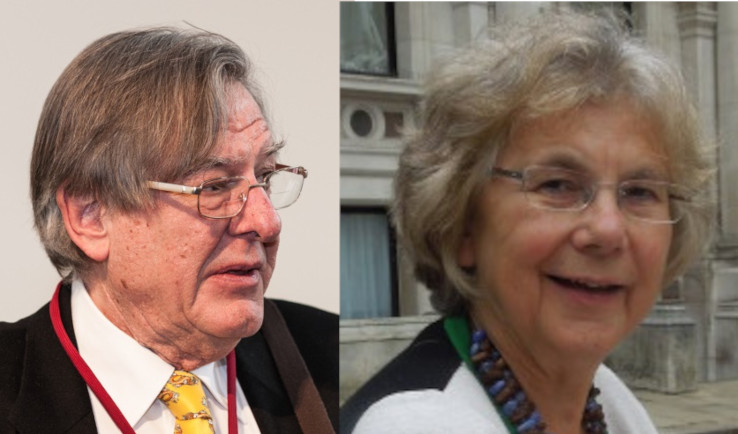
Peter Stratton
Peter Stratton PhD, FBPsS, Emeritus Professor of Family Therapy, Leeds Family Therapy and Research Centre, University of Leeds, Leeds, UK.
Peter Stratton is a Systemic Family Therapist and developmental psychologist with broad research interests and over 100 publications. His research includes continuous development of the SCORE measure of progress in therapy and quality of family life; attributional analyses of family causal beliefs and blaming; the effects of basing training on concepts of active learning and the dialogical construction of self; the relationships of humour and creativity during psychotherapy. Joint Editor of the EFTA-Springer Book series; Editorial Board Human Systems: Therapy, Culture and Attachments. Recently: Chair of EFTA Research Committee; Relate Research Advisory Group. Academic and Research Development Officer for the Association for Family Therapy; Chair of the UKCP Research Faculty and a member of the CAMHS Outcomes and Evaluations, the CYP-IAPT Critical Friends.
Founding Director of Leeds Family Therapy and Research Centre and Managing Director of The Psychology Business Ltd.
He led the teams that developed the Leeds Attributional Coding System (LACS) and The Leeds Systemic Family Therapy Manual. He chaired the UK Skills for Health team that developed the specification of the competences of systemic family therapists. In 2013 his contributions to psychotherapy research were recognised by an award by EFTA and an Honorary Fellowship of UKCP.
Helga Hanks
Helga Hanks retired in 2019 and until then was a Consultant Clinical Psychologist, Analytic Psychotherapist and Systemic Family Therapist in the Dept. of Clinical Psychology and Community Paediatrics, St James’s University Hospital, Leeds. Until her retirement from her fulltime post, she was also a Visiting Senior Lecturer at the Institute of Psychological Sciences, Leeds University. She is one of the founder members of the Leeds Family Therapy & Research Centre (LFTRC) at Leeds University which came into existence in1979. She has been Clinical Director of the Centre until 2005. She was one of the core staff who developed the MSc in Systemic Family Therapy at the Institute of Psychological Sciences, Leeds University. Since 1980 she has provided systemic training for a wide variety of professionals.
She practiced, researched, taught and wrote in the area of Child Abuse through-out her career.
The Journal of Human Systems was first published in 1990 and she was a founder Member and Editor of that Journal. She continues to be on the Editorial Board. She has published and researched widely both in the areas of family therapy and child abuse.
Abstract
Thinking how much we all lost with the death of Petros Polychronis has taken us back to all the years of valued interactions with him and with Kyriaki Polychroni. From our current position of being fully involved with systemic family therapy (SFT) but having retired from therapeutic practice, we are inspired to retrospectively pull together the main strands that have underpinned our approach for the past 50 years. Fundamentally we have argued for benefitting from the substantial advances that have been made in the wider field of systemics, which could have been supporting a much richer set of concepts of family systems than SFT has used over the past 50 years (Stratton, 2016). Similarly we valued the insights of psychodynamics, the depth of understanding of children and parenthood of developmental psychology, and the power of research to extend and challenge our thinking. So in this paper we describe those foundations of our approach to systemic family therapy which became the basis for and continue to influence our practice, training, supervision and research. We came to SFT with commitments to intervening in child protection, an enthusiasm for attachment theory, and an appreciation of psychological therapies. One strand was being able to think about how processes of individuals become systemically coordinated with their family to create a family system. So we started from the central role from birth of the perception of contingency to the ways that throughout life it orients the person to others as the major source of events that are responses to one’s actions. We made this researchable through the Leeds Family Therapy & Research Centre (LFTRC) system for analysing causal expectations and attributions in discourse. We briefly report how it has enabled us to tackle family issues that we found especially challenging such as the parental beliefs that sustain child abuse. We report current developments with LFTRC’s Leeds Systemic Family Therapy Manual as a clear specification of the ways of doing SFT that emerged from and informed our basic position and incorporate an overview of issues in manualising SFT from the new EFTA Handbook of Systemic Approaches to Manualisation .